
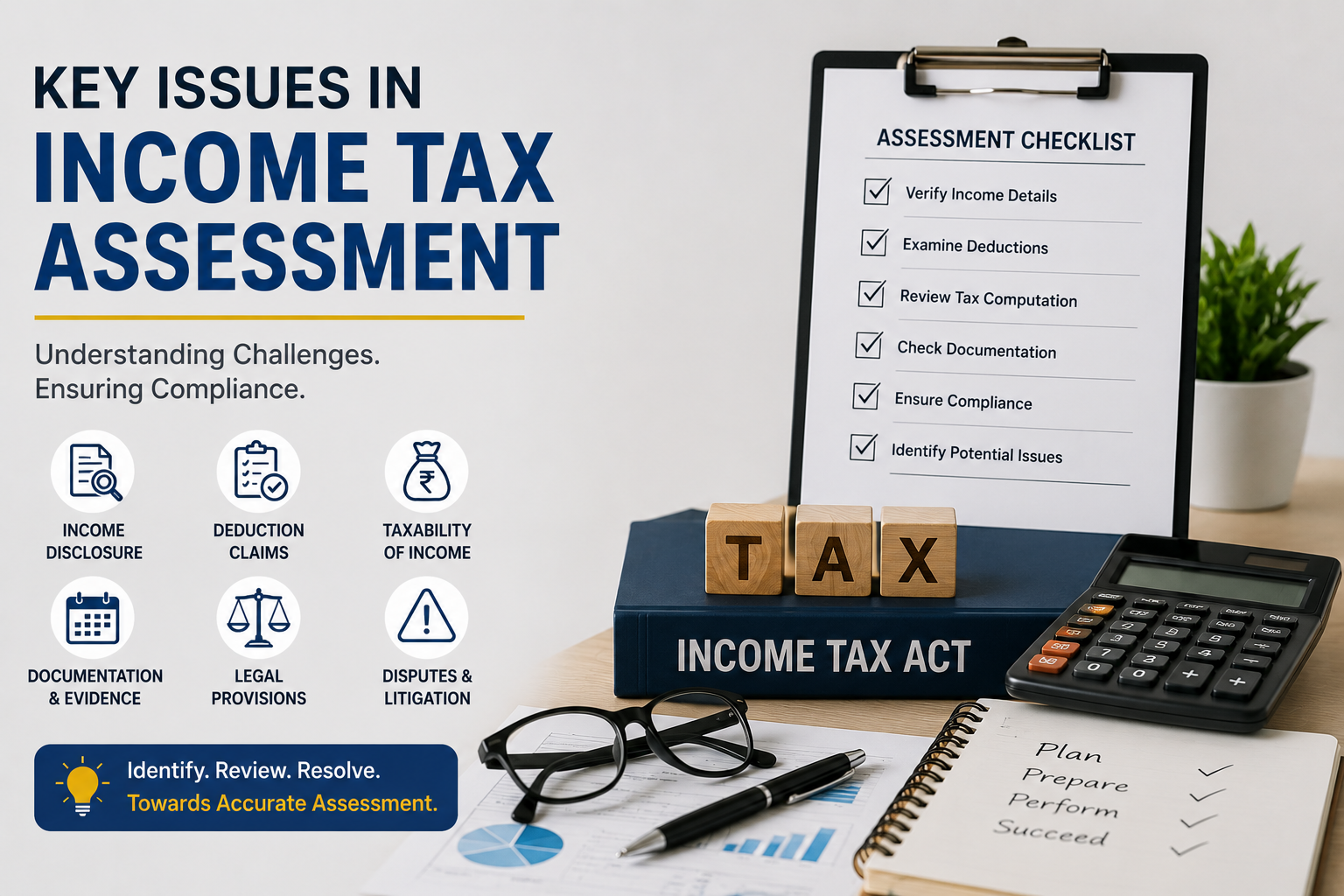
Income Tax Assessment is a crucial process through which tax authorities examine the accuracy and completeness of the income reported by taxpayers. Whether you are an individual, a professional, or a business entity, understanding the common issues that arise during assessment proceedings can help ensure compliance and avoid unnecessary disputes.
Understanding Income Tax Assessments
An Income Tax Assessment is conducted to verify the correctness of the income declared, deductions claimed, exemptions availed, and taxes paid by a taxpayer. During the assessment process, authorities may seek clarifications, supporting documents, and explanations regarding various financial transactions and tax positions.
Common Issues Faced During Assessments
1. Inadequate Documentation
One of the most common reasons for assessment complications is the lack of proper documentation. Taxpayers often fail to maintain supporting records such as invoices, agreements, bank statements, receipts, and other financial documents required to substantiate their claims.
2. Mismatch in Income Reporting
Discrepancies between the income declared in tax returns and information available with tax authorities can trigger scrutiny. Such mismatches may arise due to differences in TDS records, Annual Information Statements (AIS), Form 26AS, or financial transactions reported by third parties.
3. Incorrect Deduction Claims
Claiming deductions without proper supporting evidence or misunderstanding eligibility criteria can lead to disallowances during assessment. Taxpayers should carefully review all deductions claimed under various provisions of the Income Tax Act.
4. Unexplained Cash Transactions
Large cash deposits, withdrawals, or transactions without proper explanation often attract attention during assessments. Maintaining adequate records and providing a clear source of funds is essential to address such concerns.
5. Business Expense Verification
For businesses and professionals, tax authorities frequently review expenses claimed against income. Expenses lacking business purpose, supporting documents, or proper accounting treatment may be questioned during assessment proceedings.
6. Capital Gains and Investment Transactions
Property sales, share transactions, mutual fund investments, and other capital asset transfers require accurate computation and reporting. Errors in calculating capital gains or claiming exemptions may result in assessment queries.
7. Compliance with Notices
Failure to respond to assessment notices within prescribed timelines can lead to adverse consequences. Timely submission of documents and prompt communication with tax authorities are essential for smooth assessment proceedings.
Best Practices for a Smooth Assessment
- Maintain complete and organized financial records.
- Reconcile income with AIS, Form 26AS, and other tax records.
- Keep supporting documents for all deductions and exemptions claimed.
- Ensure proper disclosure of investments and capital transactions.
- Respond promptly to notices and requests for information.
- Seek professional guidance when dealing with complex tax matters.
Conclusion
Income Tax Assessments are an important part of the tax compliance framework. Proper record-keeping, accurate reporting, and timely responses can significantly reduce assessment-related challenges. By understanding the common issues and adopting best practices, taxpayers can navigate assessment proceedings confidently while ensuring compliance with tax regulations.
A proactive approach towards tax planning and documentation not only minimizes disputes but also helps build a strong foundation for long-term financial and regulatory compliance.