
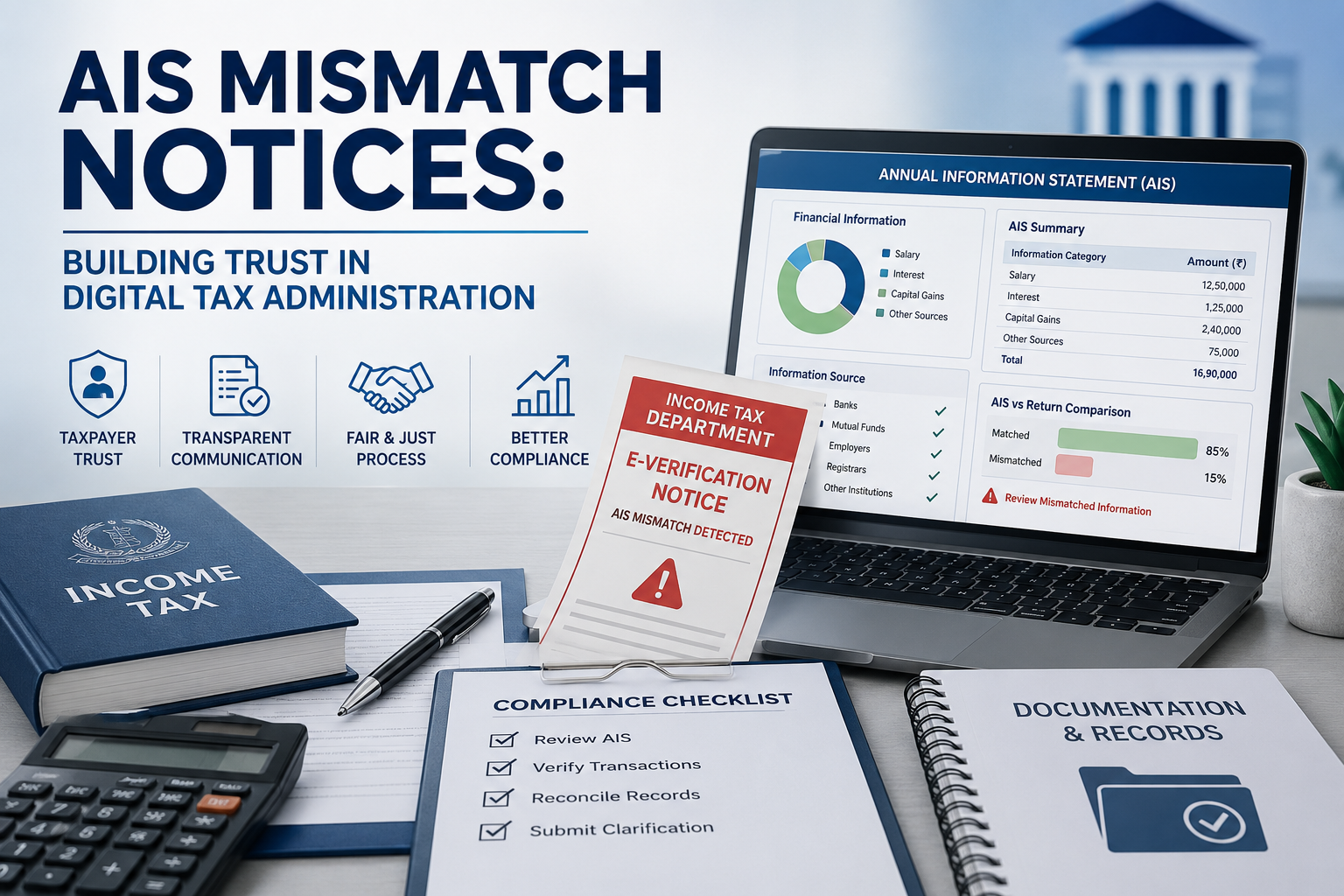
AIS Mismatch Notices: Building Trust in Digital Tax Administration
India’s tax administration is becoming increasingly digital, making compliance faster and more transparent. However, the Karnataka Chartered Accountants Association has raised concerns over the tone of automated Income Tax e-verification notices related to Annual Information Statement (AIS) mismatches, urging a more taxpayer-friendly approach.
Understanding AIS Mismatches
The Annual Information Statement (AIS) compiles financial transactions reported by banks, employers, and other institutions. Differences between AIS data and filed Income Tax Returns may arise due to:
- Timing differences in reporting
- Incorrect third-party reporting
- Duplicate entries
- Exempt transactions
- Data reconciliation issues
These mismatches often require clarification rather than indicating tax non-compliance.
Key Concerns Raised
The Karnataka CA body has highlighted that some automated notices:
- Use intimidating or adversarial language.
- Draw conclusions before taxpayer verification.
- Cause unnecessary stress for compliant taxpayers.
- Offer limited opportunity for clarification.
The Association advocates for a fair, transparent, and trust-based digital tax administration.
What Taxpayers Should Do
Receiving an AIS mismatch notice does not automatically mean tax evasion. Taxpayers should:
- Review their Income Tax Return and AIS.
- Verify Form 26AS and supporting documents.
- Check bank statements and financial records.
- Respond with clarification, if required, within the prescribed timeline.
Best Practices
To avoid future mismatches:
- Regularly review AIS and Form 26AS.
- Maintain accurate financial records.
- Reconcile transactions before filing returns.
- Verify third-party reported information.
- Seek professional guidance from a Chartered Accountant when necessary.
Conclusion
Digital tax administration is improving compliance across India, but it should also promote taxpayer confidence. A balanced, transparent, and taxpayer-centric communication system will encourage voluntary compliance while reducing unnecessary concerns. Staying informed and maintaining proper documentation remains the best approach for smooth tax compliance.