
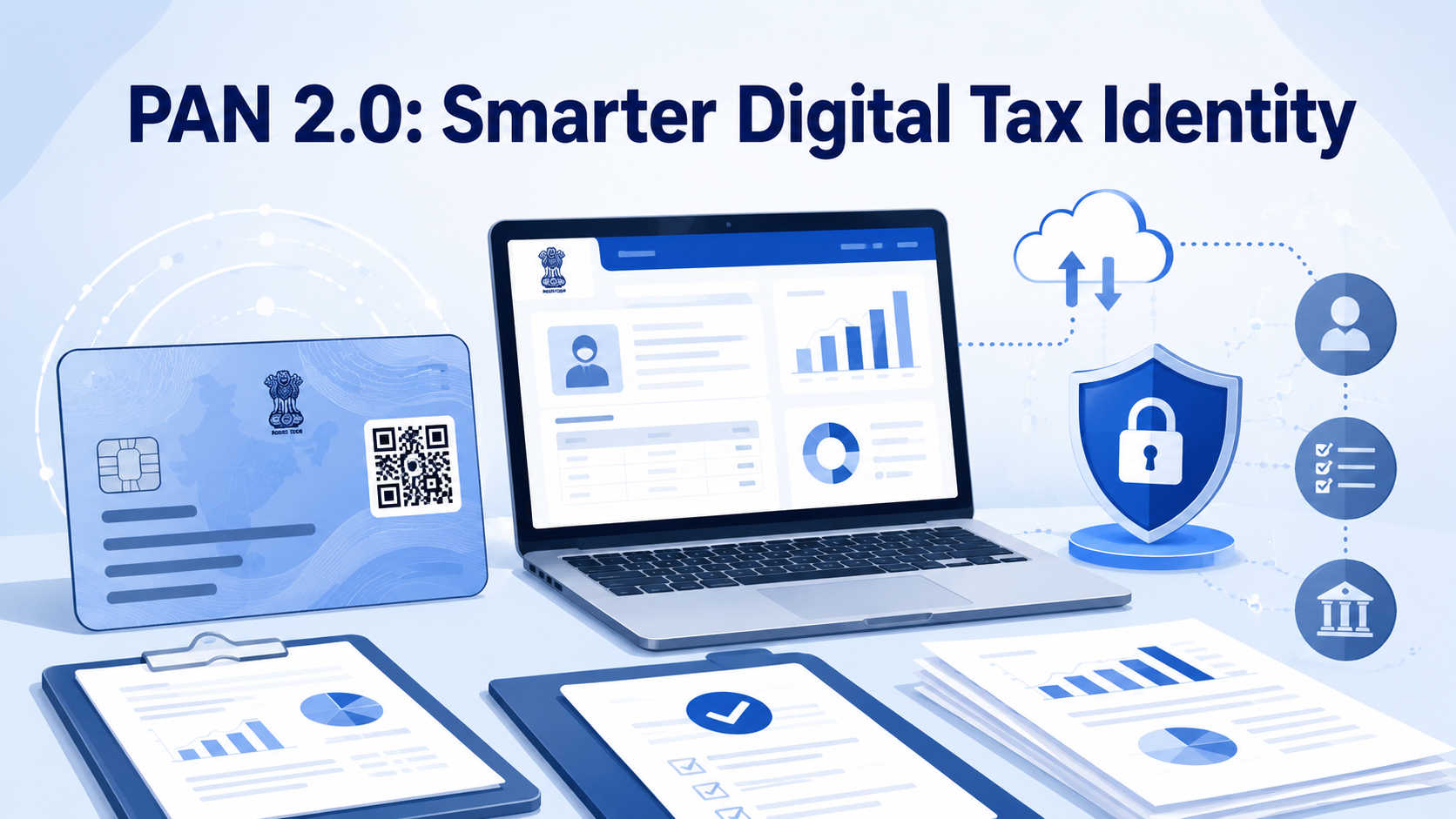
The Government of India has introduced PAN 2.0, a major digital transformation initiative designed to modernize the Permanent Account Number (PAN) system. The project focuses on improving taxpayer services, enhancing data security, and creating a unified digital platform for tax-related services.
By leveraging advanced technology, PAN 2.0 aims to make tax administration more efficient while simplifying compliance for both individuals and businesses.
What is PAN 2.0?
PAN 2.0 is an upgraded digital framework that seeks to streamline PAN-related services by integrating multiple systems into a single technology-driven platform.
Key objectives include:
- Simplified PAN services.
- Faster digital verification.
- Enhanced security features.
- Improved taxpayer experience.
- Better integration with government databases.
- Efficient digital document management.
The initiative represents a significant step towards a modern and digitally enabled tax ecosystem.
Expected Benefits for Taxpayers
PAN 2.0 is expected to provide several advantages, including:
- Faster PAN-related services.
- Improved online verification.
- Reduced paperwork.
- Secure digital identity management.
- Better access to tax-related services.
- Seamless interaction with government portals.
These improvements aim to make tax compliance simpler and more convenient for individual taxpayers.
Benefits for Businesses
Businesses are also expected to benefit through:
- Faster KYC verification.
- Streamlined compliance processes.
- Improved authentication systems.
- Better integration with financial platforms.
- Reduced administrative burden.
- More efficient digital record management.
A modernized PAN infrastructure can contribute to smoother business operations and regulatory compliance.
Importance of a Smooth Transition
While PAN 2.0 offers numerous long-term benefits, successful implementation will depend on:
- Thorough system testing.
- Stable digital infrastructure.
- Minimal disruption during migration.
- Clear communication with taxpayers.
- Efficient technical support.
A carefully managed rollout will help ensure that taxpayers and businesses can adopt the new system without inconvenience.
Conclusion
PAN 2.0 marks an important milestone in India’s digital tax transformation. By modernizing taxpayer services and strengthening digital infrastructure, the initiative is expected to improve efficiency, transparency, and ease of compliance.
As the new platform is implemented, taxpayers and businesses should stay informed about updates and follow official guidance to make the most of the enhanced PAN ecosystem.