

Introduction
Back in 2008, while banks were collapsing and trust in finance hit rock bottom, a pseudonymous figure named Satoshi Nakamoto proposed a wild idea: money and records that didn’t need anyone’s permission to be believed. The world’s first reaction was a polite “yeah, right.” Fast forward to 2026, and that “internet money experiment” is now embedded inside SAP, Oracle, and IBM systems, trusted by Fortune 100 companies and Big 4 audit firms alike. Turns out, trust didn’t need a middleman, just better math.
This article unpacks how that math actually works: how blockchain keeps data private while still being verifiable, how triple-entry accounting is quietly rewriting the rules of bookkeeping, how it stacks up against everyday tools like Tally and SAP, and why it’s nudging the Chartered Accountant’s job description from “number-checker” to “trust-assessor.” We’ll also look at where blockchain has already made itself comfortably at home, supply chains, banking, healthcare, and beyond, proving that even the most skeptically received ideas can end up running the boardroom.
Understanding Blockchain Technology
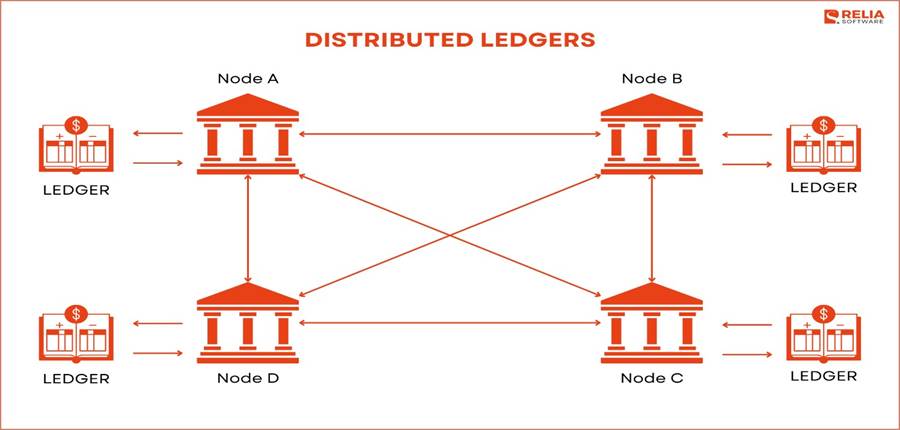
Blockchain is a decentralized digital ledger that records transactions across a network of computers. Unlike traditional accounting systems, where records are maintained in a centralized database, blockchain stores data in interconnected blocks that are cryptographically secured and linked together.
Once a transaction is recorded and validated, it becomes extremely difficult to alter or delete, creating an immutable audit trail. This provides a higher level of transparency, security, and trust compared to conventional record-keeping systems. Blockchain technology is designed to be tamper-resistant and allows participants in a network to share and verify information without relying on central authority.
Data Privacy and Confidentiality
Blockchain is often described as “transparent,” which makes its relationship with privacy seem contradictory. Blockchain systems balance transparency and confidentiality through several distinct technical mechanisms rather than through secrecy of the ledger itself.
Pseudonymity, not anonymity
On public blockchains like Bitcoin or Ethereum, every transaction is visible to anyone who looks at the ledger, but the participants are identified only by wallet addresses, strings of letters and numbers, rather than real names. This means anyone can see that a certain address sent a certain amount to another address, but not who controls those addresses unless that identity is linked elsewhere (such as through an exchange that performs identity verification). This is why blockchain privacy is usually called pseudonymous rather than truly anonymous.
Cryptographic keys control access
Each participant holds a private key and a corresponding public key. The public key (or an address derived from it) is visible to everyone, but only the holder of the private key can authorize transactions or prove ownership of assets. This asymmetric cryptography is what lets the network verify that a transaction is legitimate without anyone needing to reveal personal information.
Hashing protects underlying data
When sensitive data needs to be referenced on chain, it’s often hashed rather than stored directly. A hash is a oneway mathematical fingerprint of the data, so the chain can prove a piece of information existed and hasn’t been altered, without exposing the actual content. The real data is typically kept off chain in a private database, with only the hash recorded on the blockchain for verification.
Permissioned and private blockchains
Not all blockchains are public. Enterprise or consortium blockchains (used in supply chains, banking, or healthcare) restrict who can join the network, view transactions, or validate blocks. Access is controlled through identity management systems, so only authorized organizations or individuals can see specific data, while the network still benefits from blockchain’s tamper resistance.
Who can access what
In short: anyone can usually see that a transaction happened and its general shape, but not necessarily who was involved or what the underlying data represents, unless they hold the private key, are an authorized participant on a permissioned network, or are given specific decryption access. Confidentiality is maintained not by hiding the ledger, but by controlling who can interpret or unlock the meaning behind the data on it.
What’s Next?
You’ve now learned how blockchain works, how it secures data, and how it maintains privacy while ensuring transparency.
In Part 2, we’ll explore how blockchain is transforming accounting and auditing, introducing concepts like triple-entry accounting, smart contracts, and real-time financial reporting.
Continue Reading → Ledger to Legacy: Blockchain – Part 2 | Blockchain in Accounting & Auditing