
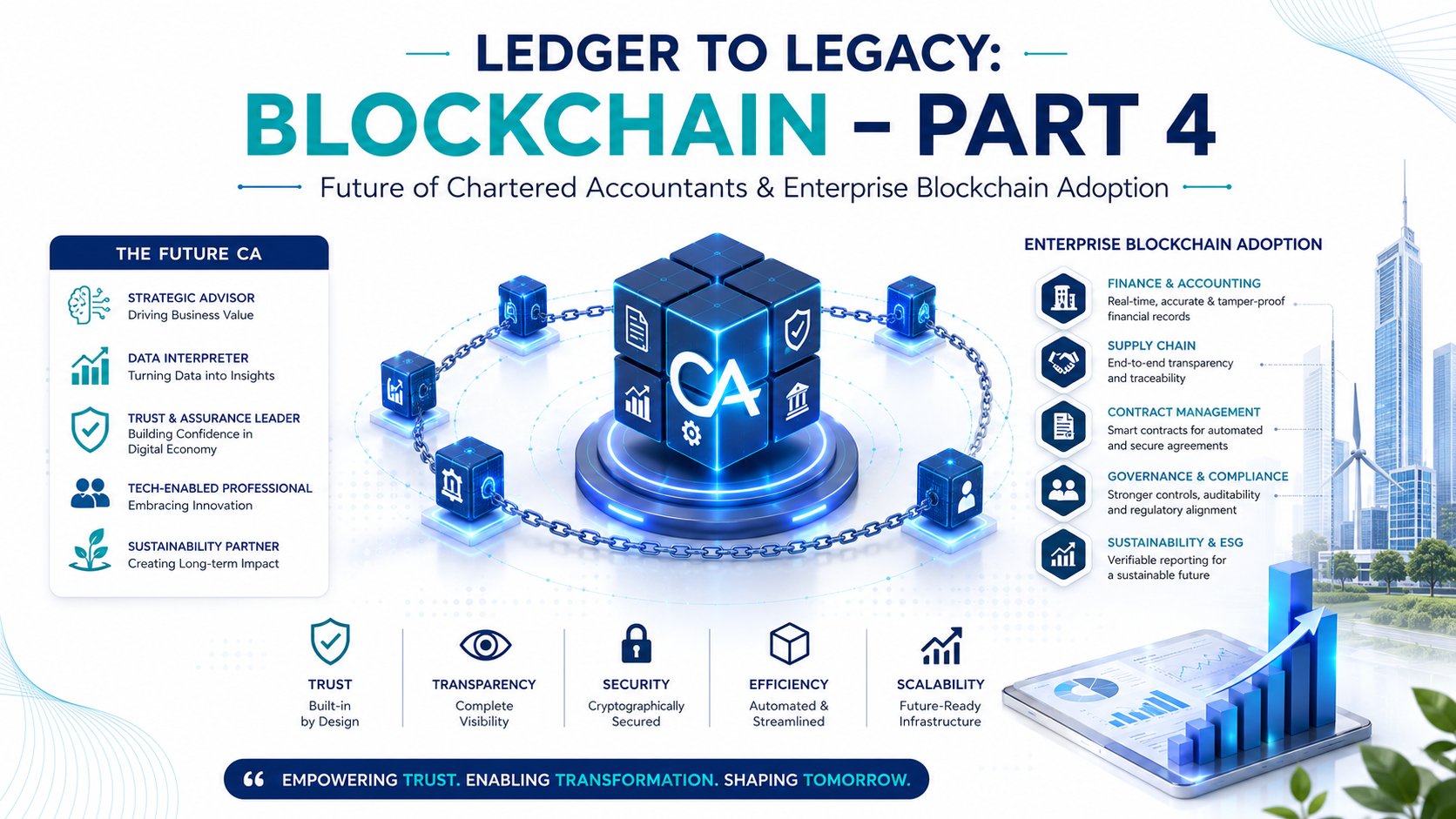
Blockchain Widely Used in 2026: Adoption, Performance and Real-World Achievements
By 2026, blockchain has moved well beyond cryptocurrency experiments. It has become a pivotal technology shaping digital transformation across enterprises, with adoption moving beyond pilots and proofs of concept into production at scale in finance, logistics, healthcare, and retail.
Key industries using blockchain widely
Supply chain and logistics is one of the strongest use cases. Blockchain provides end-to-end visibility of goods as they move through complex, multi-party supply chains, helping ensure provenance, reduce fraud, streamline customs, and verify compliance with standards. Walmart is leveraging blockchain as a way to ensure food traceability through the supply chain, while Maersk and IBM’s TradeLens platform, built on Hyperledger Fabric, was developed to enable secure sharing of shipping data among dozens of stakeholders, shippers, ports, customs, freight forwarders, and carriers, who previously maintained fragmented, separate records.
In banking and financial services, banks and financial institutions use blockchain for interbank settlement, trade finance, cross-border payments, and compliance reporting, with enterprise blockchains supporting tokenized assets and distributed ledgers that improve settlement times and reduce operational costs. JPMorgan offers a blockchain-based platform for wholesale payments transactions.
In healthcare, enterprises use blockchain to secure patient health information, enable interoperability between providers, and improve data integrity in clinical research. In retail, companies are running blockchain-based loyalty programs that reduce fraud and personalize rewards (Starbucks’ NFT-based loyalty program being a notable example). Identity management is also growing, with blockchain supporting decentralized identity (DID) systems where individuals and organizations control their own credentials, improving security and reducing identity theft.
Big tech and ERP players integrating blockchain
Major enterprise software providers have built blockchain directly into their platforms rather than treating it as a separate tool. SAP S/4HANA now seamlessly integrates decentralized ledger capabilities for global supply chain tracking, Oracle provides pre-built blockchain applications letting CFOs track secure, real-time financial transactions, Hyperledger Fabric is heavily utilized by Big 4 accounting firms to build private, permissioned financial networks, and IBM’s Blockchain Platform is used extensively for cross-border payments with strong tax compliance. Cloud providers have also lowered the barrier to entry, as AWS, Azure, and Alibaba now offer managed blockchain services using frameworks like Hyperledger Fabric and Ethereum, making it easier for enterprises to deploy without building infrastructure from scratch.
How it’s performing: measurable outcomes
Companies adopting blockchain in 2026 report concrete operational gains, including reduced operational costs from cutting out intermediaries, improved audit trails for compliance, faster settlement of financial transactions, and stronger supply chain visibility. These results are why blockchain is increasingly treated as a business requirement rather than an experiment.
What changed to drive this growth
A major factor behind 2026’s adoption surge is regulatory clarity. Frameworks like the EU’s MiCA regulation and updated U.S. guidance on digital assets are giving enterprises confidence about how blockchain fits within rules on capital requirements, securities, and reporting, especially in finance and ESG reporting. Technology has also matured: modern consensus algorithms are faster and more energy-efficient, zero-knowledge proofs now enable privacy without sacrificing transparency, and Layer-2 and sidechain solutions reduce costs and increase scalability.
Accounting bodies and professional firms
On the accounting and audit side, Big 4 firms are among the heavy users of Hyperledger Fabric to build private, permissioned financial networks, reflecting how professional accounting bodies are embedding blockchain into audit and assurance services rather than treating it as external technology.
The honest caveat
Despite the momentum, real challenges remain. Blockchain networks are often developed in silos with limited interoperability, struggle to handle very large transaction volumes, and don’t integrate natively with existing enterprise infrastructure, meaning most businesses still rely on a patchwork of point solutions to connect blockchain with their existing systems. This is precisely why the dominant model in 2026 is integration with ERP and accounting systems, not replacement of them, echoing the Tally/SAP comparison discussed earlier.
Crisp Takeaway
Blockchain in 2026 isn’t a standalone industry anymore, it’s becoming embedded infrastructure inside the tools accountants already use (SAP, Oracle, IBM), with real adoption concentrated in supply chain, banking, healthcare, and identity, validated by Fortune 100 companies and Big 4 firms, and increasingly normalized by clearer global regulation.
References
1. Miles Education. How Blockchain in Accounting is Changing Finance. 2026.
https://www.mileseducation.com/blog/accounting/blockchain-in-accounting
2. SIIT. How Enterprises Are Adopting Blockchain Technology (2026).
https://siit.co/blog/how-enterprisesare-adopting-blockchain-technology-2026/50976
3. Space and Time. The Secret to Enterprise Adoption of Blockchain.
https://www.spaceandtime.io/blog/the-secret-to-enterprise-adoption-of-blockchain
4. Blockchain Council. What’s Propelling Enterprise Blockchain Adoption in 2026?
https://www.blockchain-council.org/blockchain/enterprise-blockchain-adoption
Vandana P
Author is an Article Assistant at Deepak Niraj and Associates
Thank You for Reading
You’ve reached the end of the Ledger to Legacy: Blockchain series.
Throughout these four parts, you’ve explored blockchain fundamentals, data privacy, accounting transformation, auditing innovations, enterprise adoption, and the evolving role of Chartered Accountants in a technology-driven world.
We hope this series has provided valuable insights into how blockchain is reshaping the future of finance, accounting, and business.